2020 DOW-UAP-D56, Range Fouler Debrief, Arabian Sea, August 2020
DOW Debrief — Declassified UFO document from UFO Files Archive.
Document Details
- Agency
- DOW
- Type
- Debrief
- Classification
- UNCLASSIFIED
- Pages
- 1
- Date
- 2020
⚠️ AI-Generated Summary: This summary is generated from publicly released government documents for informational purposes only. Always refer to the original document linked above for the complete unredacted record.
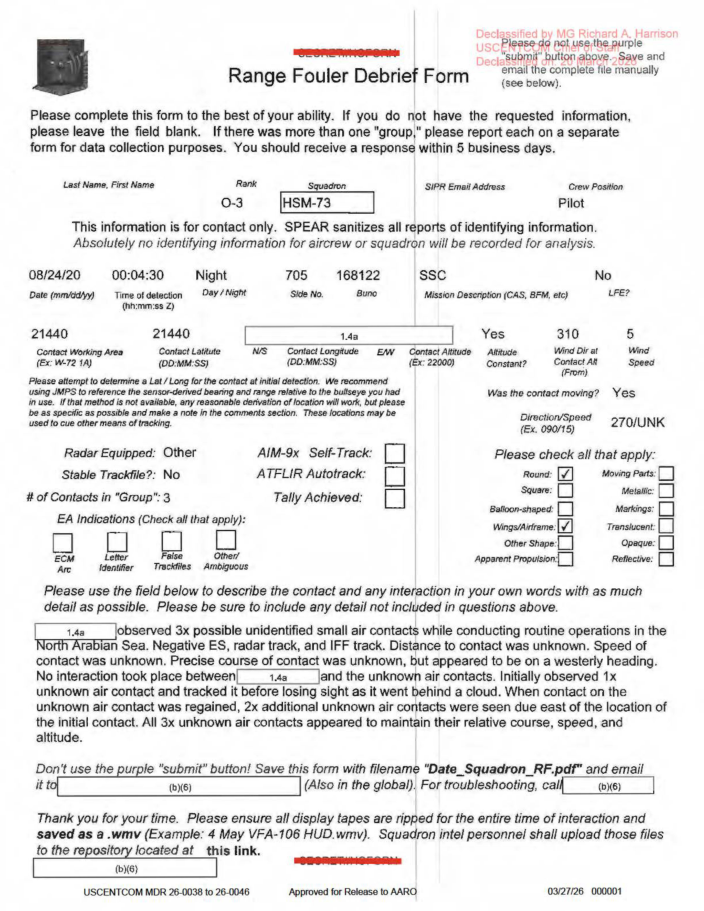
Page 1 --- Deel d 11 ,1son u.. purple S&Sli&i!lllll lfUI Deel; ,Ge. ve and F manually R F I D b · ange OU er e ne orm (see below).’ aiBriefing: ’## Document Overview
This document is an unclassified standardized reporting form for unidentified aerial phenomena sightings, identified as part of the SPEAR program. It was completed on August 24, 2020, by a military pilot (rank O-3, squadron IHSM-73) operating in the North Arabian Sea. The form records an observation of three small unknown air contacts and is designed to collect sensor and visual data while anonymizing all aircrew identities.
Source: Document metadata (OCR text); form field entries on Page 1.
What This Document Contains
-
A pilot’s narrative report of three possible unidentified small air contacts observed at night during routine operations in the North Arabian Sea.
-
Negative results from electronic surveillance (ES), radar track, and IFF (Identification Friend or Foe) interrogation for the contacts.
-
Reported contact working area coordinates of 21°44′0″ N, 21°44′0″ E, with unknown contact altitude, speed, and precise heading (estimated westerly).
-
The form is part of the SPEAR system, which states it “sanitizes all reports of identifying information” and that “absolutely no identifying information for aircrew or squadron will be recorded for analysis.”
Source: Page 1, filled form fields and narrative response section.
Key Observations
The pilot wrote: “observed 3x possible unidentified small air contact while conducting routine operations in the North Arabian Sea. Negative ES, radar track, and IFF track. Distance to contact was unknown. Speed of contact was unknown. Precise course of contact was unknown, but appeared to be on a westerly heading. No interaction took place between [redacted] and the unknown air contacts. Initially observed 1x unknown air contact and tracked it before losing sight as it went behind a cloud. When contact on the unknown air contact was regained, 2x additional unknown air contacts were seen due east of the location of the initial contact. All 3x unknown air contacts appeared to maintain their re[ported course? — text cuts off].”
Source: Page 1, “Please use the field below to describe the contact…” narrative entry.
Context & Significance
This form is emblematic of the modern, structured military approach to UAP data collection, likely tied to the U.S. Department of Defense’s efforts to centralize and standardize pilot sightings. The use of a sanitized reporting channel (SPEAR) indicates an institutional mechanism for gathering operational UAP encounters without attribution risks, contributing to the broader dataset of military UAP observations. The report’s location in the North Arabian Sea in 2020 aligns with a period of increased UAP reporting from Navy assets.
Source: Document’ keyFindings: [] tags:
- DOW
- Debrief
- N/A relatedFiles: [] featured: false heroImage: /pdf-covers/dow-uap-d56-range-fouler-debrief-arabian-sea-august-2020.png documentType: Debrief region: N/A decade: 2020s releaseBatch: Release 01 coverImage: /pdf-covers/dow-uap-d56-range-fouler-debrief-arabian-sea-august-2020.png archiveId: DOW-UAP-D56,_Range_Fouler_Debrief,_Arabian_Sea,_August_2020 warGovUrl: https://www.war.gov/ufo/#DOW-UAP-D56, Range Fouler Debrief Arabian Sea August 2020 officialDescription: ’--- Page 1 --- Deel d 11 ,1son u.. purple S&Sli&i!lllll lfUI Deel; ,Ge. ve and F manually R F I D b · ange OU er e ne orm (see below).’ evidenceLevel: Eyewitness Report hasUAPObservation: true mentionsPhysicalEvidence: false mentionsBiological: false ocrQuality: high
[WARN] AI-Generated Summary: This summary is generated from publicly released government documents for informational purposes only. Always refer to the original document linked below for the complete unredacted record.
Document Overview
This document is an unclassified standardized reporting form for unidentified aerial phenomena sightings, identified as part of the SPEAR program. It was completed on August 24, 2020, by a military pilot (rank O-3, squadron IHSM-73) operating in the North Arabian Sea. The form records an observation of three small unknown air contacts and is designed to collect sensor and visual data while anonymizing all aircrew identities.
Source: Document metadata (OCR text); form field entries on Page 1.
What This Document Contains
- A pilot’s narrative report of three possible unidentified small air contacts observed at night during routine operations in the North Arabian Sea.
- Negative results from electronic surveillance (ES), radar track, and IFF (Identification Friend or Foe) interrogation for the contacts.
- Reported contact working area coordinates of 21°44′0″ N, 21°44′0″ E, with unknown contact altitude, speed, and precise heading (estimated westerly).
- The form is part of the SPEAR system, which states it “sanitizes all reports of identifying information” and that “absolutely no identifying information for aircrew or squadron will be recorded for analysis.”
Source: Page 1, filled form fields and narrative response section.
Key Observations
The pilot wrote: “observed 3x possible unidentified small air contact while conducting routine operations in the North Arabian Sea. Negative ES, radar track, and IFF track. Distance to contact was unknown. Speed of contact was unknown. Precise course of contact was unknown, but appeared to be on a westerly heading. No interaction took place between [redacted] and the unknown air contacts. Initially observed 1x unknown air contact and tracked it before losing sight as it went behind a cloud. When contact on the unknown air contact was regained, 2x additional unknown air contacts were seen due east of the location of the initial contact. All 3x unknown air contacts appeared to maintain their re[ported course? — text cuts off].”
Source: Page 1, “Please use the field below to describe the contact…” narrative entry.
Context & Significance
This form is emblematic of the modern, structured military approach to UAP data collection, likely tied to the U.S. Department of Defense’s efforts to centralize and standardize pilot sightings. The use of a sanitized reporting channel (SPEAR) indicates an institutional mechanism for gathering operational UAP encounters without attribution risks, contributing to the broader dataset of military UAP observations. The report’s location in the North Arabian Sea in 2020 aligns with a period of increased UAP reporting from Navy assets.
Source: Document
18 100754 General 1946-7 Vol 2
18 6369445 General 1948 Vol 1
255 413270 UFO's and Defense What Should we Prepare For
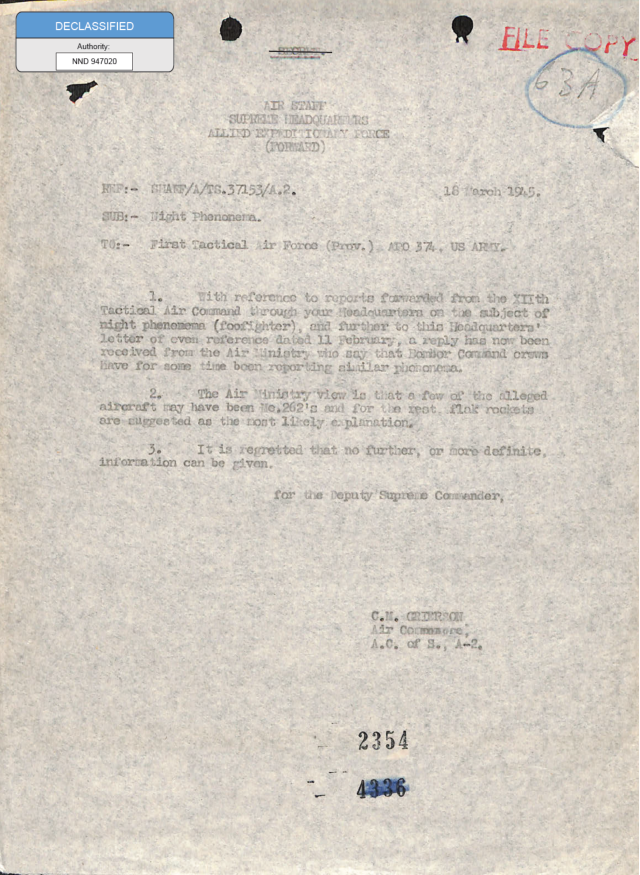
331 120752 Numeric Files 1944-1945 37153 German Armament Equipment Documents
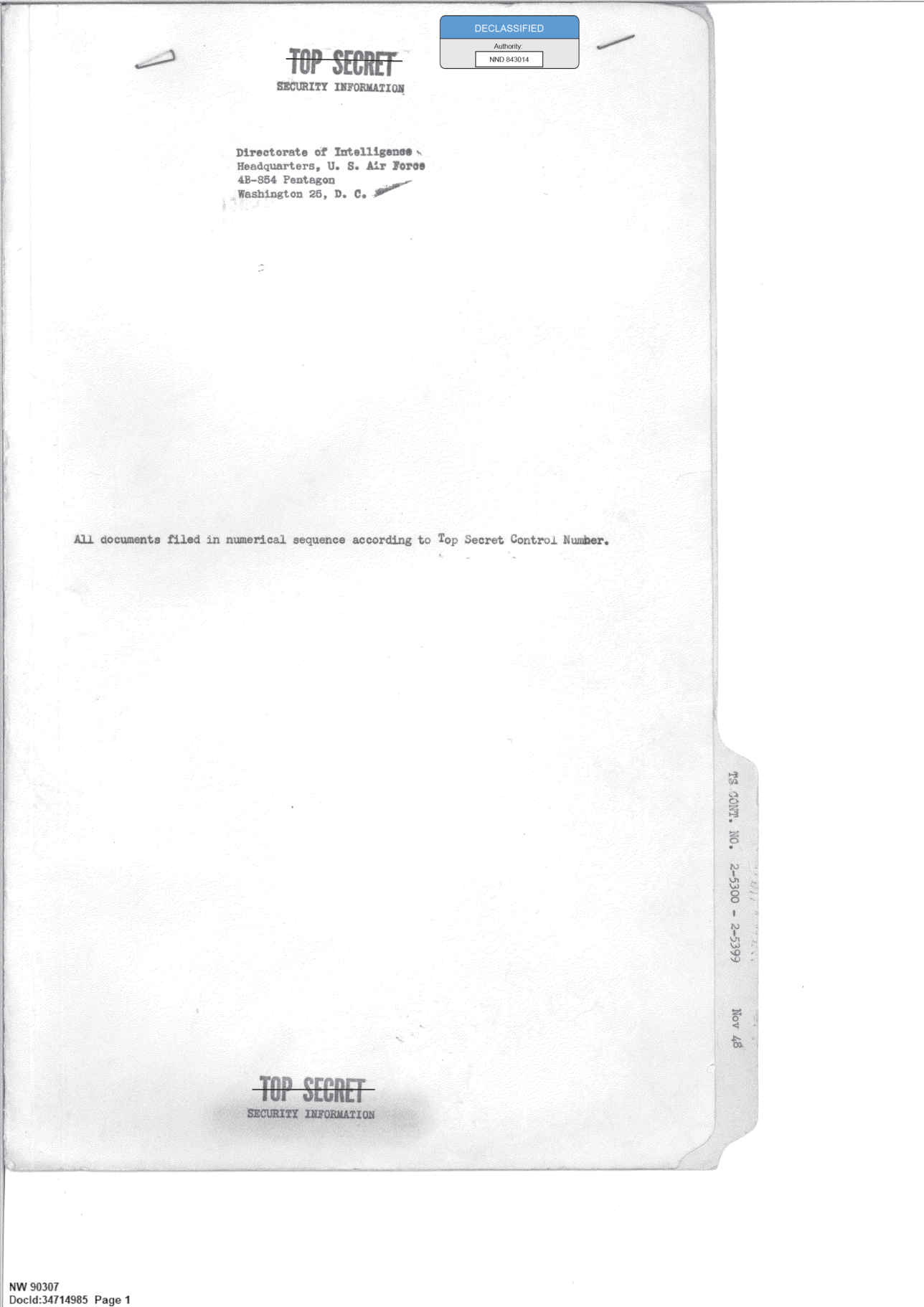
341 110448 Records Relating to the Collection and Dissemination of Intelligence 1948-1955-TS CONT No.2 2-5300-2-539